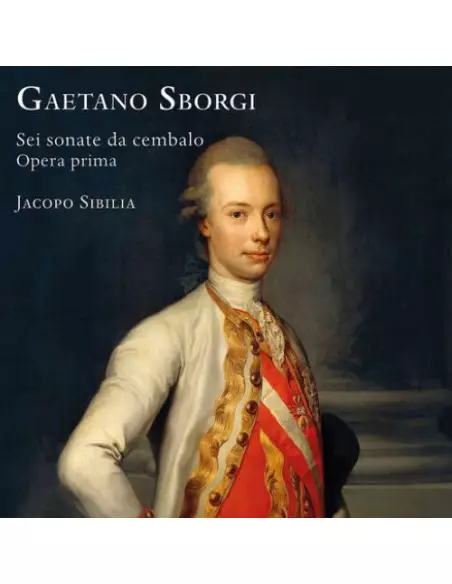
L'immagine ha valore puramente indicativo: verifica le informazioni, la scheda potrebbe contenere degli errori.
Sibilia, Jacopo - Gaetano Sborgi - Sei Sonate Da Cembalo, - (CD)
Released 27 February 2026
EAN 8007194108439
€ 17.99
Tasse incluse
Available
Estimated delivery between 15 December 2026 and 17 December 2026
Description
Sei Sonate da Cembalo, Opera Prima presents six sonatas dedicated to Lorenzo Niccolini, a chamberlain serving Pietro Leopoldo I and Ferdinando III. The collection belongs to a revealing period in keyboard history, when the established harpsichord tradition was beginning to meet the expressive possibilities of the piano and its struck strings. Heard in this light, the work offers a focused portrait of changing ideas about keyboard sound, response and musical expression.
Jacopo Sibilia performs the sonatas on a copy of an 1783 Stein fortepiano, placing the instrument itself at the heart of the project. Its two available action types allow the performance to explore different degrees of articulation and expression while retaining a refined, balanced character. Issued by Tactus on CD, this release brings together the work of Gaetano Sborgi and Jacopo Sibilia in an edition shaped by historical instrument choice rather than by repertoire alone.
Why you'll love it
This CD will appeal to listeners drawn to eighteenth-century keyboard music, historically informed performance and the development of the piano. The Stein-based instrument makes the transition from plucked harpsichord to struck-string keyboard more tangible, while its alternative actions open up a wider palette for phrasing and nuance. It is a rewarding discovery for anyone interested in how instrument design can influence the character of a sonata and the decisions made by its performer.
Trivia
- The sonatas were dedicated to Lorenzo Niccolini, who served at the courts of Pietro Leopoldo I and Ferdinando III.
- Sibilia uses a copy of an 1783 Stein fortepiano rather than a modern piano or a standard harpsichord.
- The instrument supports two distinct action types, adding an unusual practical dimension to the interpretation.