Born in 1985 and revived in the mid-’90s with Clapton: origins, writing, arrangement, reception and trivia—your comprehensive guide.
Origins & context (1985–1986)
Cut during the Zucchero & The Randy Jackson Band sessions (1985), the track places spoken Italian over a soul/R&B canvas. In 1986 it appears as the B-side to “Canzone triste”, slowly becoming a cherished deep cut among fans.
Writing: a kitchen-table scene
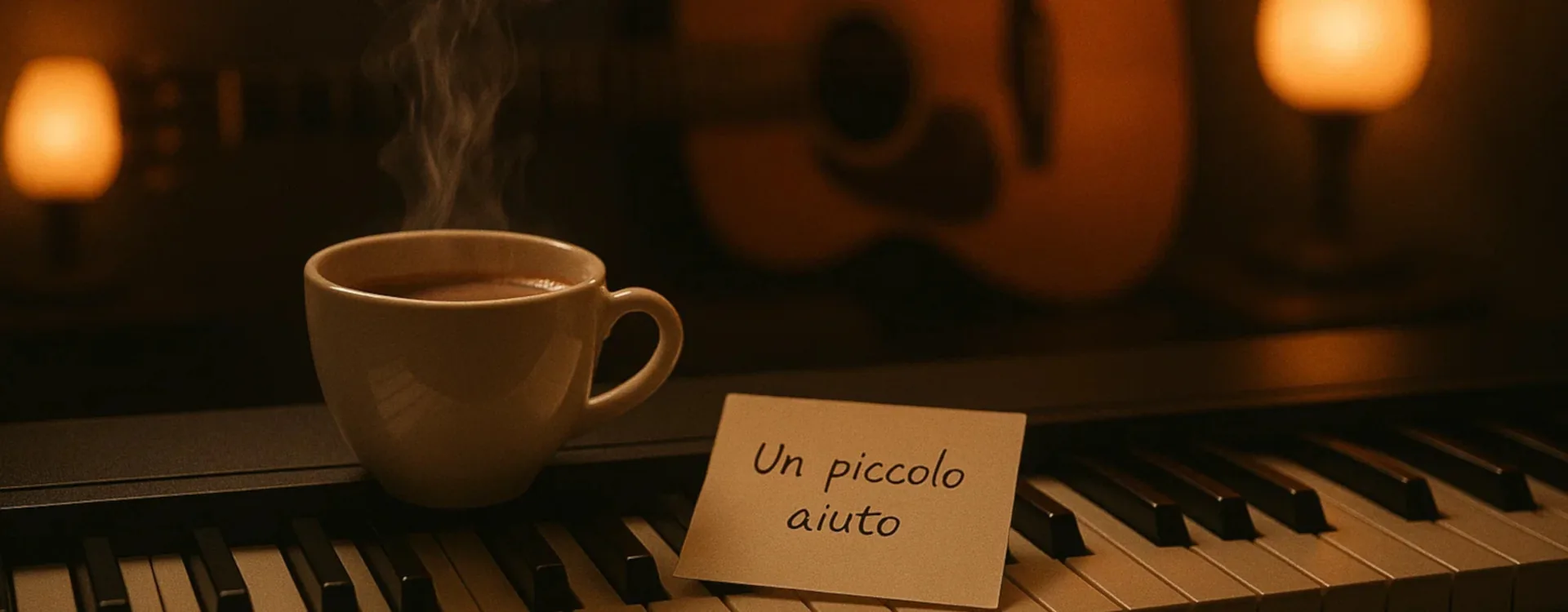
Music by Zucchero, lyrics by Alberto Salerno. The frame is humble: late evening, two tired people, a light coffee instead of a grand statement. Domestic tenderness beats fireworks—less is more.
Meaning: a secular prayer for company
It asks for presence, not triumphs. Night becomes a soft shelter; the “saint” here is us, offering small helps that matter more than any promise.
Sound & arrangement
Mid-slow tempo, warm electric piano, clean guitars, restrained backbeat. An I–IV–V skeleton scented with blue notes. Vocals sit close; prosody leads the melodic phrasing. Intimate by design.
Sessions & players (focus)
Band feel
American-flavoured groove, generous dynamics, respectful interplay around the voice.
Timbres
Electric piano cushion, discreet arpeggios, dry drums: arrangement serves the story.
Mix space
Voice up front, short reverbs, intimate proximity—the narrative stays center stage.
Second life: Clapton & orchestra (1996–1997)
Mid-’90s, the song dresses up as a small classic: Zucchero with Eric Clapton and the Turin Philharmonic Orchestra (conductor José Molina). Strings in suspension, warm guitar, a long tail: cinematic breadth without losing the original blush.
Reception, legacy, uses
A hidden gem
For years a fan-favourite B-side: not radio-loud, yet time-proof.
Stage & reissues
Resurfaces in acoustic sets and anthologies: a hush falls when it starts—every time.
Narrative fit
Ideal for intimate scenes (theatre, TV, podcasts): mood-ready at press of play.
Discography box
Album
Title: Zucchero & The Randy Jackson Band (1985) — Label: Polygram
Track: “Un piccolo aiuto” (LP B-side)
Length (album): ~3:30–3:35 (varies by edition)
7” single (1986)
Title: “Canzone triste / Un piccolo aiuto” — Label: Polydor — Cat.: 883810-7
Symphonic version
Credits: Zucchero, Eric Clapton, Turin Philharmonic, José Molina — Length: ~5:38
Writers/Publishing
Music: Zucchero — Lyrics: Alberto Salerno — Publishing: Warner Chappell — (P) 1985 Universal
Trivia (deep-dive)
The art of “less”
Spare words, vivid images: subtraction makes intimacy believable.
Prosody as arrangement
Italian speech rhythm shapes the line; music follows meaning.
Musicians’ favourite
Simple form, wide interpretive room—perfect for unplugged and orchestral takes.
Closing-time aura
Often placed late in the set: a soft goodnight that lingers.
Suggested listening
Italian soul ballads
Zucchero: “Canzone triste”, “Dune mosse” — Lucio Dalla: “Stella di mare”.
Duets & reworks
Zucchero & Clapton: mid-’90s live takes — Zucchero: 2000s unplugged sets.
Sister moods
Ray Charles ballads, Eric Clapton mid-tempo mellowness, ’80s blue-eyed soul.
Quick FAQ
- Is it a love song? Yes—domestic, quiet, presence over fireworks.
- Why not an A-side? It shines in the long run, not in radio peaks.
- Album vs symphonic? Album = bare & true; symphonic = velvet wrap.
In one line
A room, two cups, low words: “Un piccolo aiuto” is a proximity classic.