Confused by repress, reissue and remaster? Here’s the plain‑English guide with real‑world examples and a quick checklist so you can buy with confidence.
“Admit it: you bought a repress thinking it was a first press… 😅”
The differences in 30 seconds
Repress
- What: the same edition pressed again later.
- How it sounds: usually the same or very similar to the earlier run.
- Pros: cheaper than first press; easy to find.
- Cons: little collector upside; quality may vary by plant.
- Spot it: same catalog number; similar deadwax.
Reissue
- What: a new edition (new code/cover). May use a new master, extras and updated packaging.
- How it sounds: sometimes better (if well mastered), sometimes the same.
- Pros: chance to improve sound and materials.
- Cons: not every reissue adds value; beware “cosmetic only”.
- Spot it: mastering notes, run size and plant, updated credits.
Remaster
- What: the sound is newly mastered from the original mixes before cutting to vinyl.
- How it sounds: can be cleaner, more detailed and dynamic — or too loud/bright.
- Pros: can fix historic issues and improve balance/stage.
- Cons: heavy compression kills dynamics and tires the ear.
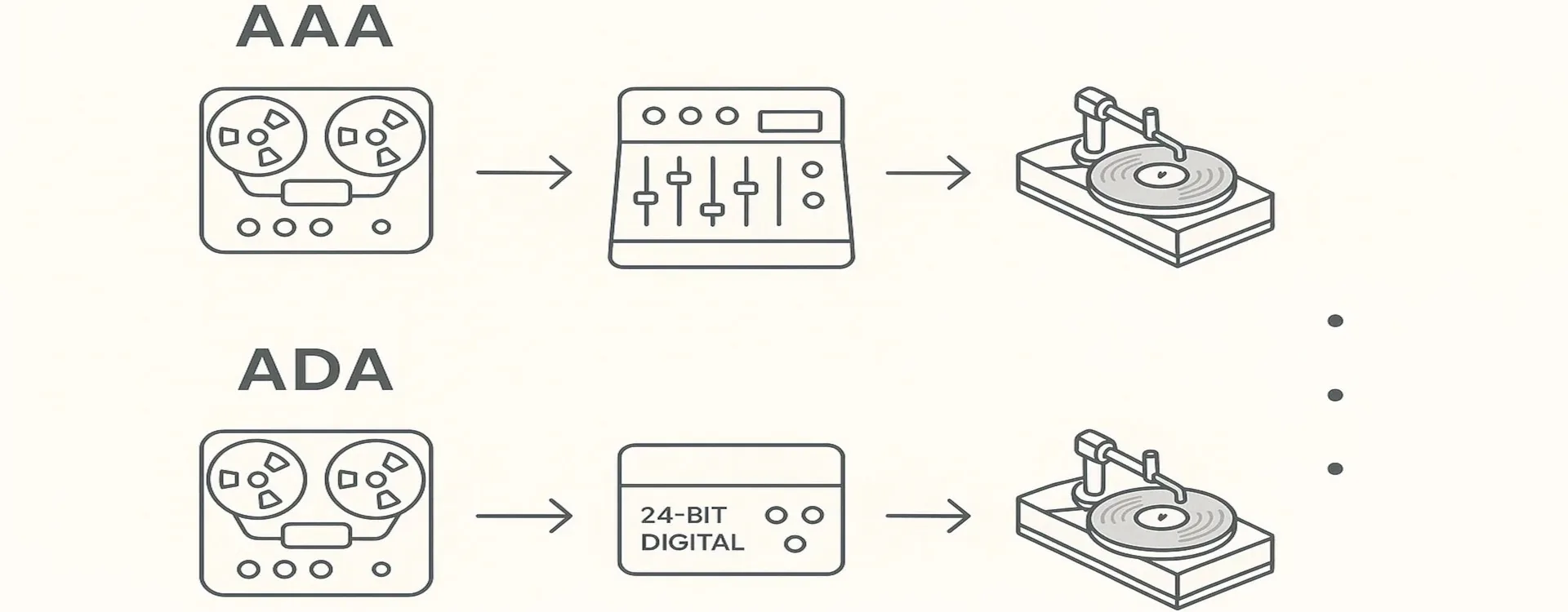
- Spot it: “2025 remaster”, “cut by…”, “AAA/ADA”, “half‑speed”.
What to pick? 3 everyday cases
You want the best listening copy
Pick: a well‑curated reissue or a dynamic remaster with clear credits (named engineer, good plant).
Why: highest care for source, cutting and pressing.
You want good sound at a fair price
Pick: a reliable‑label repress.
Why: honest/identical sound, easy to find.
You want a “definitive” object
Pick: an AAA reissue or a remaster with detailed specs (AAA, well‑done half‑speed, premium plant).
Why: top quality and long‑term value.
1‑minute buying checklist
- Mastering credit? Look for “cut by …” and a named engineer.
- Source info? Original tapes or specified hi‑res files (avoid vague wording).
- Pressing plant named? Optimal, Pallas, QRP, MPO… beats “unknown”.
- Color variant? Nice, but doesn’t improve sound — weigh the price.
- Deadwax/runout: initials and numbers identify who cut it and which version you have.
Myths (quick)
- “First press always sounds best”: often false. Many modern reissues sound better.
- “180g = better sound”: weight helps flatness, not fidelity by itself.
- “Half‑speed is always superior”: only if the source and mastering are right.
- “Colored vinyl sounds worse”: not necessarily; plant and cutting matter more.
Ready to choose smarter? Browse available vinyl, filter by label, year and variant.
Browse vinylSimple FAQ
Can a repress sound worse?
If the plant/materials change you may get more noise — but often it’s identical.
Do reissues always add extras?
No. Some add booklets/bonus; others are just updated sleeves.
Is a remaster always louder (and better)?
No. Too much compression hurts dynamics. Look for “dynamic”.
What’s the deadwax?
The small inner area with etched codes/initials that identify the cut/version.
Mini‑glossary
- Mastering: final tuning of the sound before pressing.
- Cutting: engraving to lacquer or DMM used to make stampers.
- Deadwax/Runout: inner area with matrix codes and initials.
- AAA/ADA: all‑analog chain (AAA) or mixed analog→digital (ADA).
- Half‑speed: cutting at half speed for better high‑frequency accuracy.
- Plant: pressing facility (affects noise/quality).