
Pink Floyd were never just a rock band. They turned music into atmosphere, sound into space, and albums into complete worlds. This guide explores their story, their evolving style, and their most important albums, helping you understand which record best represents each era — and which one to choose today.
Why Pink Floyd still matter today
Few artists have shaped modern music as deeply as Pink Floyd. Their influence goes far beyond progressive rock: they changed how albums are conceived, how sound can tell stories, and how silence can be as powerful as noise.
Listening to Pink Floyd casually is possible. Listening to them properly, however, reveals why their music still feels relevant, unsettling and emotionally precise decades later.
A brief biography: from psychedelic freedom to conceptual mastery
Formed in London during the late 1960s, Pink Floyd emerged from the psychedelic underground with a radically open approach to music. Their early years were marked by experimentation and imagination, before evolving into something more structured and ambitious.
Over time, the band developed a unique balance: narrative concepts, expansive soundscapes, philosophical themes and a constant desire to push rock music beyond its limits.
The Pink Floyd style: six defining elements
- Atmosphere first: sound as environment.
- Guitar as storytelling: emotional, vocal phrasing.
- Studio experimentation: technology used creatively.
- Concept albums: albums as unified narratives.
- Psychological themes: time, alienation, power, identity.
- Dynamics: long tension followed by release.
The albums and their historical context
The Piper at the Gates of Dawn (1967)
A pure psychedelic statement. Colourful, surreal and unpredictable, this debut captures the spirit of Swinging London and introduces a band driven by imagination rather than convention.
A Saucerful of Secrets (1968)
A transitional album where experimentation replaces chaos. The band begins to shape a new identity, exploring sound as texture and space.
Atom Heart Mother (1970)
Rock expands toward orchestral ambition. This album reflects a growing confidence in scale, structure and sonic architecture.
Meddle (1971)
The moment when the classic Pink Floyd sound truly emerges. “Echoes” sets the blueprint for their future: patience, atmosphere and emotional depth.
Obscured by Clouds (1972)
More direct and concise, yet deeply atmospheric. Often rediscovered later, it plays a key role in the band’s transition toward maturity.
The Dark Side of the Moon (1973)
A universal masterpiece. Time, pressure, money and mental fragility are transformed into a seamless sonic journey. One of the most influential albums in music history.
Wish You Were Here (1975)
An intimate and emotional album about absence, friendship and disillusion. Its restrained beauty makes it one of the most beloved records in the Floyd catalogue.
The Wall (1979)
A monumental rock opera exploring isolation, trauma and identity. Ambitious, theatrical and deeply personal, it remains one of the band’s most discussed works.
The Final Cut (1983)
Dark, political and intensely narrative. A tense album that closes a crucial chapter in the band’s history.
A Momentary Lapse of Reason (1987)
A new beginning shaped by the sound of the 1980s. Modern production, expansive atmospheres and a renewed sense of direction.
The Division Bell (1994)
A mature, reflective album focused on communication and human distance. Spacious, melodic and emotionally balanced.
The Endless River (2014)
A contemplative epilogue. Less a new chapter than a farewell, built on atmosphere, memory and sound.
How to choose your first Pink Floyd album
- For a complete experience: The Dark Side of the Moon
- For pure emotion: Wish You Were Here
- For a theatrical journey: The Wall
- For psychedelic origins: The Piper at the Gates of Dawn
- For mature reflection: The Division Bell
Shop: essential Pink Floyd albums
Click on a cover to go directly to the product page and explore available editions.

The Dark Side of the Moon
A timeless masterpiece.
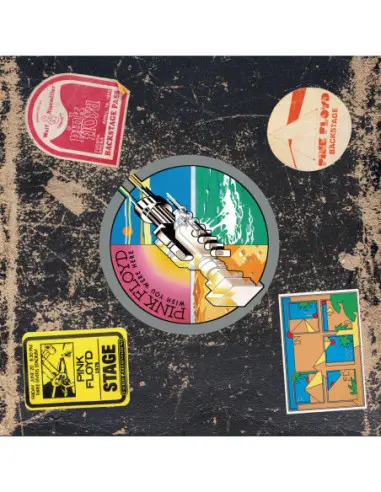
Wish You Were Here
Intimate, emotional and unforgettable.

The Wall
A monumental rock opera.

The Division Bell
Mature and expansive sound.