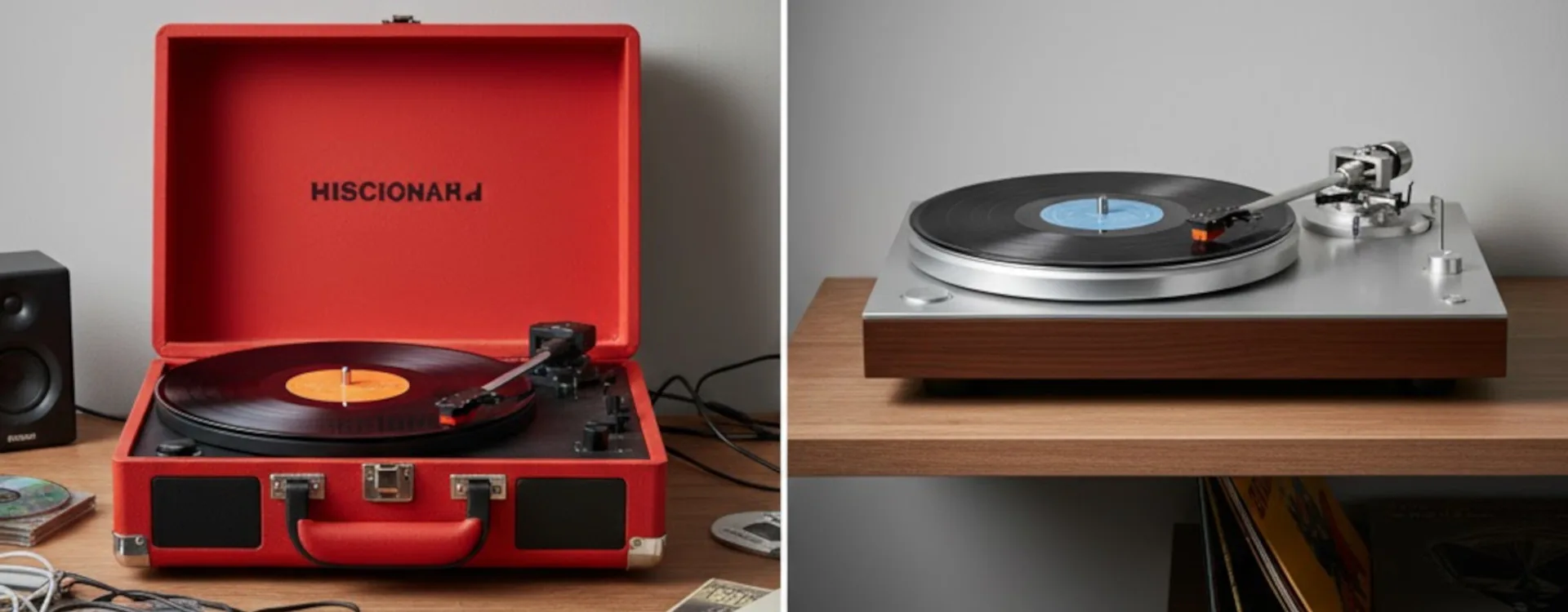
You’ve always been fascinated by vinyl, but the idea of spending a fortune keeps you on the sidelines? Good news: you can start a vinyl record collection with less than €300 if you avoid the classic beginner mistakes and impulse buys.
In this guide we’ll look at, step by step, how to start a vinyl collection without wasting money: what turntable to choose, how many records to buy at the beginning, when it makes sense to save and when it’s smarter to spend a little more.
1. The Basic Plan: How to Use Your First €300 Wisely
Before getting lost in limited editions, picture discs and colored variants, you need a simple plan. Here’s a smart way to split your first budget:
- €150–180 for a decent entry-level turntable (not a toy suitcase player).
- €80–120 for your first 6–10 vinyl records, mixing new and used in good condition.
- €20–30 for essential accessories (record cleaning brush, anti-static inner sleeves, a tiny tool to clean the stylus).
It’s not a strict rule, but a guideline: the idea is that you first build a solid playback setup, and only later you start chasing deluxe box sets and super expensive limited editions.
What to Do with Your First €300
- Pick a reliable branded turntable, even if it’s entry-level.
- Buy a few carefully selected albums, not “anything cheap”.
- Add at least one record cleaning brush.
- Invest in quality inner/outer sleeves.
What to Avoid at the Beginning
- Buying 20 €5 records and zero accessories.
- Choosing only by price, ignoring quality.
- Starting with €100+ box sets as your very first records.
- Buying suitcase turntables with flimsy built-in speakers.
2. The Turntable: Where You Can Save and Where You Really Can’t
The foundation of any vinyl collection is not only the records themselves, but the turntable. A great album on a terrible turntable will still sound bad. So let’s cover the basics for beginners.
2.1 New vs Used Turntables
- New entry-level turntable: perfect if you don’t want to deal (yet) with complex adjustments and hidden issues. Pros: warranty, no surprises, plug-and-play. Cons: “honest” performance, but not audiophile-level.
- Used mid-range turntable: if you find a good deal from a trustworthy seller, you can get a much better machine for the same money. Pros: better components and sound quality. Cons: you must check the tonearm, stylus, motor and auto-return mechanisms carefully.
2.2 What to Absolutely Avoid
If you want to start a vinyl collection without wasting money, there are a few traps worth avoiding:
- Ultra-light suitcase players with built-in speakers: often have poor arms, no tracking force adjustment and can damage your records over time.
- Random “all-in-one” USB turntables from supermarkets with no real upgrade path.
- Deals that look too good to be true: turntable + speakers + preamp at a ridiculously low price usually means many compromises in sound and build quality.
2.3 Minimum Features to Look For
- Adjustable tracking force (you can set how hard the stylus presses on the record).
- Anti-skating control (even a simple one), to keep the stylus centered in the groove.
- MM cartridge (moving magnet), easy to replace and upgrade in the future.
Even if you’re just starting out, a decent turntable is an investment: it lets you enjoy your vinyl more and protects your records from unnecessary wear.
3. Your First Records: Few, but Carefully Chosen
When you start a vinyl record collection, it’s normal to want to buy every album you love. But with a limited budget, the smart move is:
- 20–30% “heart records” you know you’ll spin over and over.
- 70–80% “smart classics” that hold their value and are essential in any collection.
3.1 How to Pick Your First 6–10 Vinyl Records
Here’s a simple logic you can follow:
- 1–2 rock/pop classics you know by heart – hearing them on vinyl is a real experience.
- 1 key album from your own country (a great local band or singer-songwriter that represents your music roots).
- 1 iconic soundtrack (movie or TV series) that resonates with you emotionally.
- 2–3 “discovery albums” recommended by friends, trusted shops or reviews.
Your first records don’t need to be rare numbered editions or fancy splatter variants. The priority is having records you genuinely want to listen to, not just show off on social media.
3.2 New vs Used Records
- New vinyl: lower risk of defects, but higher price. Great for recent releases and quality reissues.
- Used vinyl: ideal for classics, as long as you check condition carefully (no deep scratches, no warping, no mold on covers).
For beginners, a mix is perfect: a few well-kept used classics plus some new titles you absolutely want in your collection.
4. How to Avoid Getting Burned When You Start Buying Vinyl
Fear of “getting ripped off” is one of the main reasons people delay starting a collection. In reality, a few simple rules help a lot.
4.1 Always Check the Condition of the Record
If you’re buying in a physical shop or at a record fair:
- Hold the record under a strong light:</strong deep, wide scratches are a red flag; light hairlines can be acceptable.
- Check for warping:</strong place the record on a flat surface and look at the edges.
- Smell the cover and inner sleeves:</strong a strong moldy smell can mean long-term storage problems.
4.2 Learn to Read Online Condition Gradings
When you buy records online, condition grades matter:
- “Mint / Near Mint” (M / NM): virtually perfect or very close to it.
- “Very Good / Very Good+” (VG / VG+): good for everyday listening, some light signs of use.
- “Good / Fair” (G / F): often quite worn, with noticeable surface noise and visible marks.
When you’re starting out, it’s usually better to buy fewer records in better condition rather than filling shelves with noisy, beaten-up vinyl.
5. Essential Accessories to Make Your Records Last
To properly kick off your vinyl collection on a budget, you need more than just a turntable and a stack of records. A couple of small accessories make a huge difference:
- Carbon fiber brush to remove dust and static before each play.
- Anti-static inner sleeves to protect records from scratches and dust when stored.
- Stylus cleaning tool or soft brush to gently remove debris from the needle.
These are small expenses, but they extend the life of your records and improve sound quality. Plus, as your collection grows, you’ll already have good habits in place.
6. A Simple Strategy for Your First Year as a Collector
Want a straightforward plan for your first year of collecting vinyl? Here’s a practical roadmap:
- Month 1: Buy your turntable and your first 4–5 records you truly love.
- Months 2–3: Add 1–2 records per month, learning to recognize pressings, reissues and special editions.
- Months 4–6: Start exploring new genres and add a couple of limited or colored editions (only if you really like them).
- After 6 months: Review your collection: which records do you actually play? Which ones were impulse buys? Use that to refine your buying criteria.
By the end of the year, you’ll have a small but solid vinyl collection built with intention, not random purchases.
7. The Real Secret: Buy Records That Mean Something to You
When you step into the vinyl world, it’s easy to chase whatever is trending: “sold out” limited editions, flashy color variants, picture discs that photograph well. But the best way to start is much simpler:
- Buy albums you’d play alone at home, not just when friends come over.
- Choose records with a story in your life – first concert, a specific period, a special person.
- Treat limited editions and rare variants like spices, not the main dish.
This way, even with less than €300, your collection will already feel personal and unique, not a copy of someone else’s shelf on social media.
Glossary of Technical Terms
- Tracking force: the pressure with which the stylus (needle) rests on the record. Too high and you’ll wear out the grooves; too low and the record may skip.
- Anti-skating: a small adjustment that compensates for the tonearm’s tendency to move inward, helping keep the stylus centered in the groove.
- MM cartridge (Moving Magnet): very common, affordable type of cartridge, easy to replace and ideal for beginners.
- Picture disc: a vinyl record with an image printed on its surface. Looks great, but can sometimes be a bit noisier than standard black vinyl.
- Limited edition: a pressing produced in a fixed number of copies (often numbered), sometimes with special colours, artwork or bonus content.
- Mint / Near Mint / Very Good / Good: grading terms used to describe the condition of a record and its sleeve in the used market, from almost perfect to clearly worn.
Starting from these basics and a clear budget, you can build your vinyl collection without wasting money and enjoy, one record at a time, a hobby that can stay with you for years. 🎧💿