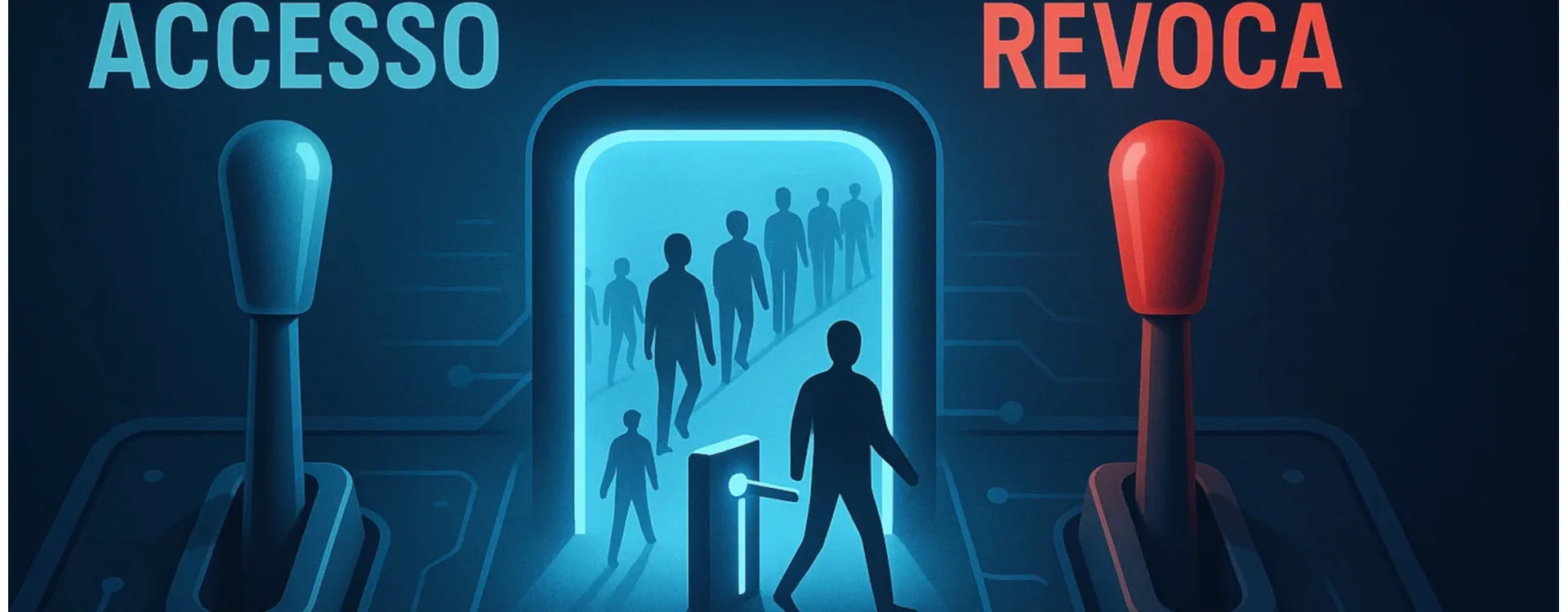
From housing to cars, from software to books, from music to films: the center of gravity is moving from owning things to accessing them, mediated by platforms and recurring fees. This is not just a business-model tweak: it’s an anthropological shift that touches rights, memory, social identity and even the way we pay.
Contents
Abstract
The access economy brings convenience and upgradability, but shifts power and rights toward global operators, creates rents and risks access classes. Without correction, we may slide into a social order where “we own nothing,” and status depends on the ability to pay—and to remain compliant with the policies of platforms and payment processors.
Prologue: an everyday scene
It’s evening. You want to replay an album you “bought digitally.” You open the app: it’s gone—rights expired. You try the film saved in your online “library”: removed from the catalog. Your car prompts an update: heated seats now require a monthly premium package. You try to pay with your phone, but the wallet asks for extra verification and blocks the transaction for the day. You paid to access, not to own.
Micro-callout: access is truly convenient; stability over time is not.
1) A short genealogy of ownership
Ownership is not only economic: it’s a cultural device structuring memory, relationships and responsibility. Private property historically includes powers such as lending, reselling and transforming a good. Digitalization redraws this perimeter: what used to be an object becomes a right to use files and functions.
2) From ownership to access
Since the late 1990s: software licenses became normal, then digital stores for music and books, then streaming. In parallel, subscriptions entered tangible goods (cars, smart home). This is servitization: value migrates from the object to the network that enables it. Impacts: financial risk pushed to the customer, revocability of access, dependence on private infrastructures.
Micro-callout: if value sits in the network, whoever controls the network controls you.
3) Types of access
- Digital licenses (ebooks, music, software): limited transferability, possible revocations, territories.
- Catalog subscriptions (audio/video): shifting selection; variable quality and availability.
- On-demand features on physical goods: hardware exists but is “locked” behind software paywalls.
- Mobility as a service (car/bike sharing): lower immobilized capital, higher dependency on schedules and policies.
- Spaces/tools by subscription (coworking, storage): low entry costs, potential contractual lock-ins.
4) Six case studies
- Digital books: works removed from online “libraries” when rights lapse; users learn they hold a license, not a copy.
- Music: albums bought in stores become non-downloadable; streaming versions differ or vanish.
- Video: entire catalogs withdrawn from “purchase” platforms when agreements end; users keep a credit, not the title.
- Cars: options locked behind fees; the feeling of “perpetual rent” on hardware already installed.
- Smart home: cloud-managed locks/thermostats; if a service ceases or policies change, users lose control.
- Payments: wallets and gateways can impose limits, blocks or offboarding, affecting economic access.
Micro-callout: when everything is a “service,” everything can be switched off.
5) Platforms, rents and asymmetries
- Network effects: more users → more value → higher exit barriers.
- Lock-in: DRM, clauses and closed ecosystems make switching costly.
- Rents: recurring fees stabilize revenues and create gatekeeper roles.
Result: customer “choice” is framed by informational and contractual asymmetry. Innovation becomes the management of access, more than the production of better goods.
6) When money itself becomes a service
As cash declines and wallets/cards rise, paying becomes a service. Upside: convenience, traceability. Risks: dependency on operators, blocks, offboarding, profiling. If payment is a service, access to money becomes “at the provider’s discretion,” not fully ours.
Key question: who decides who can pay what, when and under which conditions?
7) “Subscription” identities
Social status tends to be measured via subscription profiles: pro tiers, 4K, premium add-ons. Three layers emerge:
- Premium: maximum quality, minimal friction.
- Basic: essential services, downgrades, ads.
- Excluded: out of services due to costs or policies.
A conditional citizenship forms around the ability to renew.
8) Why owning still matters
Owned objects are biographical beacons: they accumulate marks, notes, repairs. They sustain secondary circulations (lending, used markets, gifting) and autonomy. Access “as a stream” externalizes memory and control; secondary rights thin out.
Micro-callout: own what concerns your memory, work and education. Subscribe to the rest.
9) Real benefits (and limits)
- Inclusive entry: low upfront cost. Limit: cumulative cost and dependency.
- Upgradability: features “over the air.” Limit: unilateral changes and downgrades.
- Efficiency: fewer idle resources, more sharing. Limit: scarcity governed privately.
- Scalability: modular growth. Limit: lock-ins and high switching costs.
The question is not “access yes/no,” but “under which conditions” and with which minimum rights.
Access vs Ownership — Pros & Cons
| Dimension | Access (subscription) | Ownership (copy/object) |
|---|---|---|
| Upfront cost | Low (Pro) | Medium/high (Con) |
| Cost over time | Recurring; can exceed purchase (Con) | One-off; only care/storage remains (Pro) |
| Technical quality | Variable, service-dependent (Con) | Controllable by edition/master (Pro) |
| Use rights | Revocable license (Con) | Lend, resell, gift (Pro) |
| Dependency on others | High: DRM, policies (Con) | Low: local/offline use (Pro) |
| Longevity/value | No resale value (Con) | Possible appreciation (Pro) |
| Interoperability | Closed ecosystems (Con) | Greater freedom of use (Pro) |
| Payment resilience | Needs renewals (Con) | Pay once and done (Pro) |
| Environmental impact | Fewer objects, but data centers (Trade-off) | Materials/transport, but long life (Trade-off) |
| Inclusion | Easy entry; exclusion if fees fail (It depends) | Higher entry; guaranteed long-term use (It depends) |
Before/After — Focused ownership vs all-subscription life
Before: focused ownership
- Essential personal library (key books, reference vinyl/4K).
- Work tools with stable licenses or local copies.
- Monthly subscription spend capped by a preset ceiling.
- Diversified payment methods (including cash) for resilience.
After: all subscriptions
- Digital libraries subject to removals and quality changes.
- Critical tools tied to fees and policies.
- Fragmented, rising monthly spend (add-ons, upgrades).
- Payments dependent on third-party gateways and wallets.
Micro-callout: the goal isn’t hoarding—it's selecting what to own to remain autonomous.
10) The real bill: TCO vs Subscription
TCO (Total Cost of Ownership) = upfront price + maintenance + space/time − residual value.
Subscription = monthly fee × months + extras (upgrades, add-ons) + access-loss risk.
Example A — A cornerstone album
- Physical: quality vinyl €35, residual value €20 → net TCO €15.
- Streaming: €12/month; in 24 months €288.
Example B — Work tool
- Perpetual license: €240 + biennial upgrade €120 → €360 over 4 years.
- SaaS: €20/month → €960 over 4 years.
Micro-callout: for what you use often and long, owning tends to win within 12–36 months.
TCO calculator (editable table)
Edit the cells with your numbers to compare ownership and subscription.
| Item | Ownership (€/values) | Subscription (€/values) |
|---|---|---|
| Upfront price / Monthly fee | e.g., 240 | e.g., 20 |
| Duration (months) | e.g., 48 | e.g., 48 |
| Total upgrades/maintenance | e.g., 120 | e.g., 180 (add-ons/upgrades) |
| Residual value (ownership only) | e.g., 80 | — |
| TCO / Total spend | =(Price + Upgrades − Residual) | =(Fee × Duration + Extras) |
| Notes | Quality, resale, freedom of use | Revocation risk, quality changes |
Micro-callout: add a “loss of access risk” line into the subscription total if the service is unstable.
11) Objections & replies
“With access I get everything instantly.”
True for average availability, not for that specific title over time. Availability is conditional on catalogs and licenses.
“Physical takes up space.”
Yes—so it should be selected. Own what concerns memory, work, education; subscribe for the rest.
“The monthly fee is small.”
Tiny per month, but add 24–36 months and compare with ownership’s residual value.
“Digital is greener.”
It depends on use, duration and infrastructure. Long-life physical + a healthy second-hand market can be competitive.
12) Three 5–10 year scenarios
A) Subscription normalization
Access by default, marginal cash, minimal user rights. Risk: conditional economic citizenship.
B) Course correction
Standards for portability and offline use, user rights in licenses, transparency on DRM; plural payment channels. Balance between convenience and autonomy.
C) Selective return to ownership
In culture, critical work and archives the demand for local copies and open hardware grows. Dual track: access for quick consumption, ownership for what matters.
13) Policy compass
- Minimum user rights in licenses: (even limited) transferability, guaranteed offline use, transparency on revocations.
- Interoperability and portability across services; open formats and metadata.
- Algorithmic transparency on pricing/access; anti-discrimination safeguards.
- Payment resilience: multiple channels (including cash) and fair procedures against blocks/offboarding.
- Infrastructure pluralism: public/community alternatives (libraries with clear rights, local networks, cultural-institution cooperation).
14) What to do now
For individuals
- Select what to own: books, records, tools and content critical to identity and work.
- Compute TCO before subscribing; set a cap on recurring fees.
- Archive locally when permitted; keep physical copies.
- Diversify providers and payment methods; avoid total lock-in.
- Cultivate secondary markets: used, lending, gifting.
For communities/institutions
- User-centric digital rights charters for libraries/archives.
- Acquire local copies and preservation infrastructure.
- Education on licenses and TCO in schools and cultural centers.
Micro-callout: golden rule — subscribe to convenience; own what concerns memory, work, education.
Conclusions
Access is powerful and useful; yet without embedded rights it turns freedoms into permissions and citizens into ever-renewing clients. The path forward isn’t rejecting the network: it’s negotiating standards, reinforcing pluralism and choosing with clarity what to keep and what to rent. This is where a piece of our cultural and economic autonomy is at stake.
Essential references
- Jeremy Rifkin, The Age of Access.
- Aaron Perzanowski & Jason Schultz, The End of Ownership.
- Nick Srnicek, Platform Capitalism.
- Shoshana Zuboff, The Age of Surveillance Capitalism.
- Brett Christophers, Rentier Capitalism.
- Brett Scott, Cloudmoney.
- Discussed cases: removals from “purchased” digital libraries; withdrawn video catalogs; car features behind paywalls; cash decline and wallet rise.